



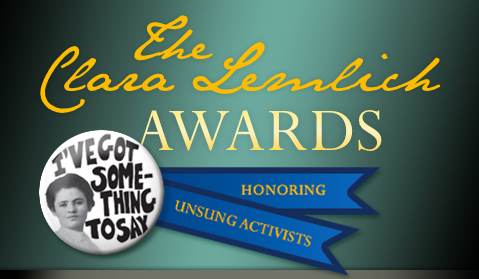
The Clara Lemlich Awards Awards honor women who have been working for the larger good their entire lives, in the tradition of those who sparked so many reforms in the aftermath of the Triangle Shirtwaist Factory Fire over one hundred years ago.
We honor — in the words of the poet Marge Piercy — people who:
- jump into work head first / without dallying in the shadows.
- who do what has to be done, again and again.
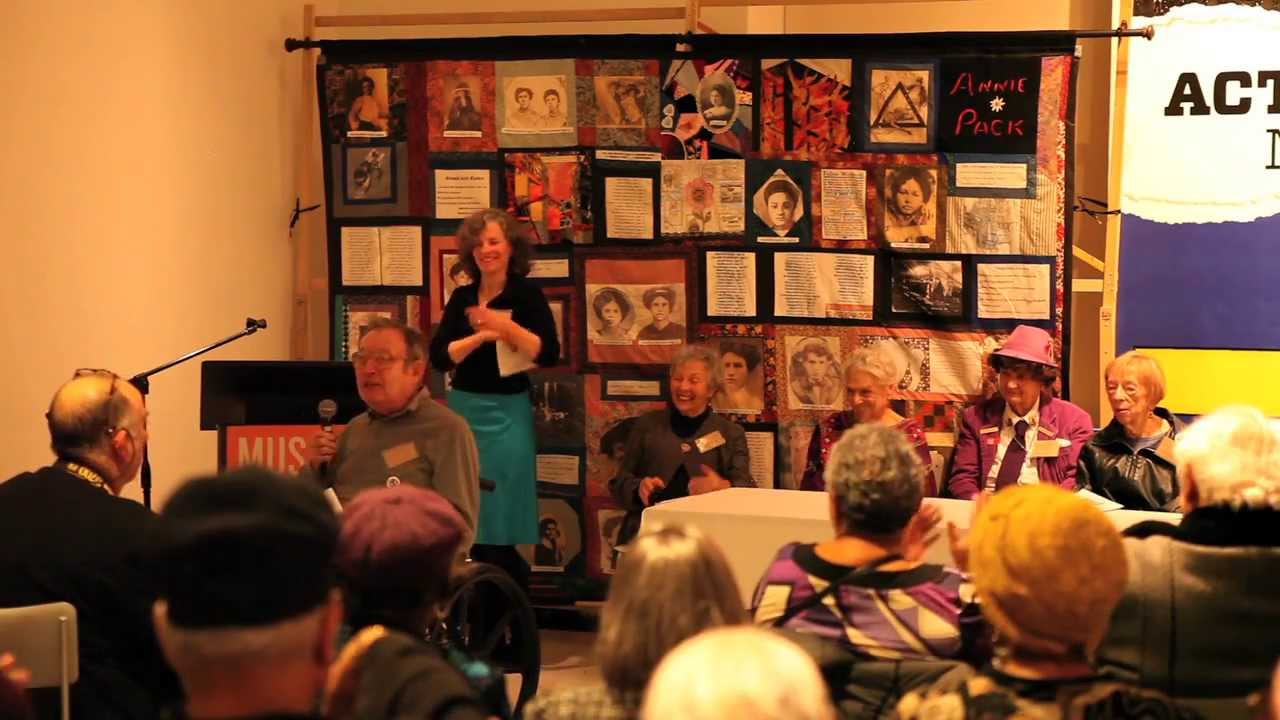
The Third Annual Clara Lemlich Awards were held Wednesday April 3, 2013 at the Puffin Gallery for Social Activism at the Museum of the City of New York.
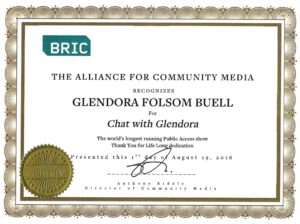
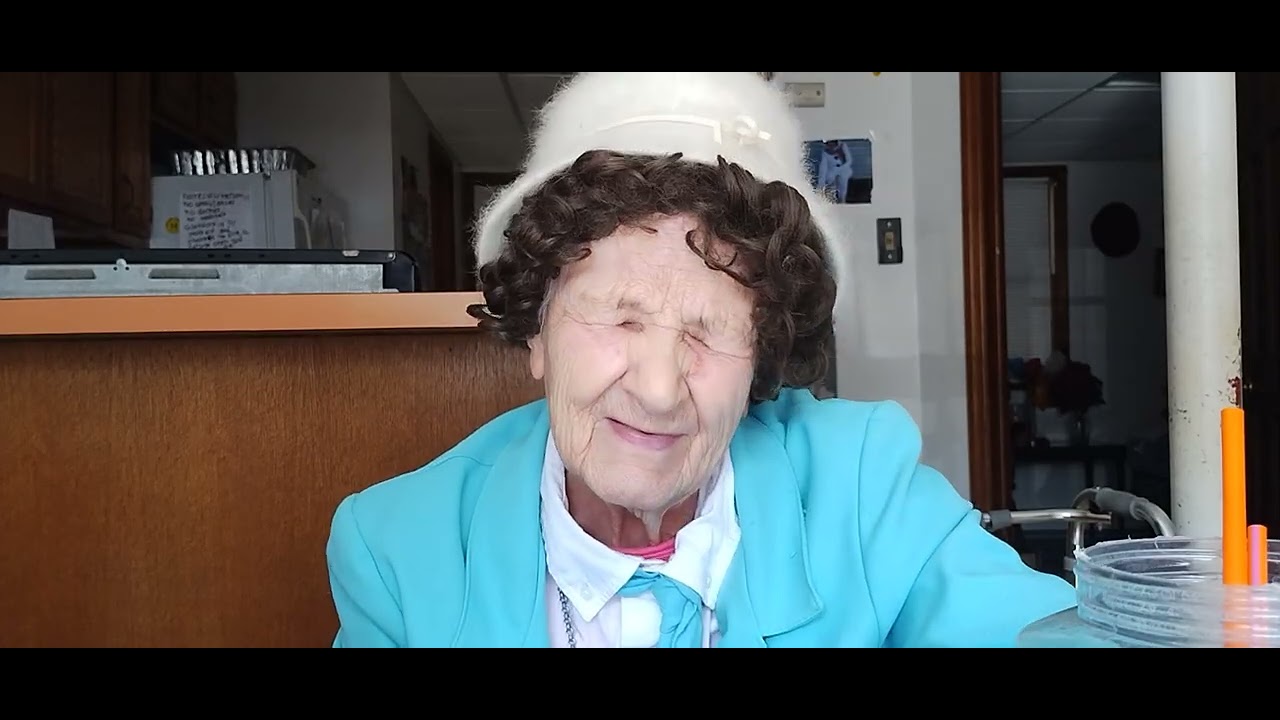
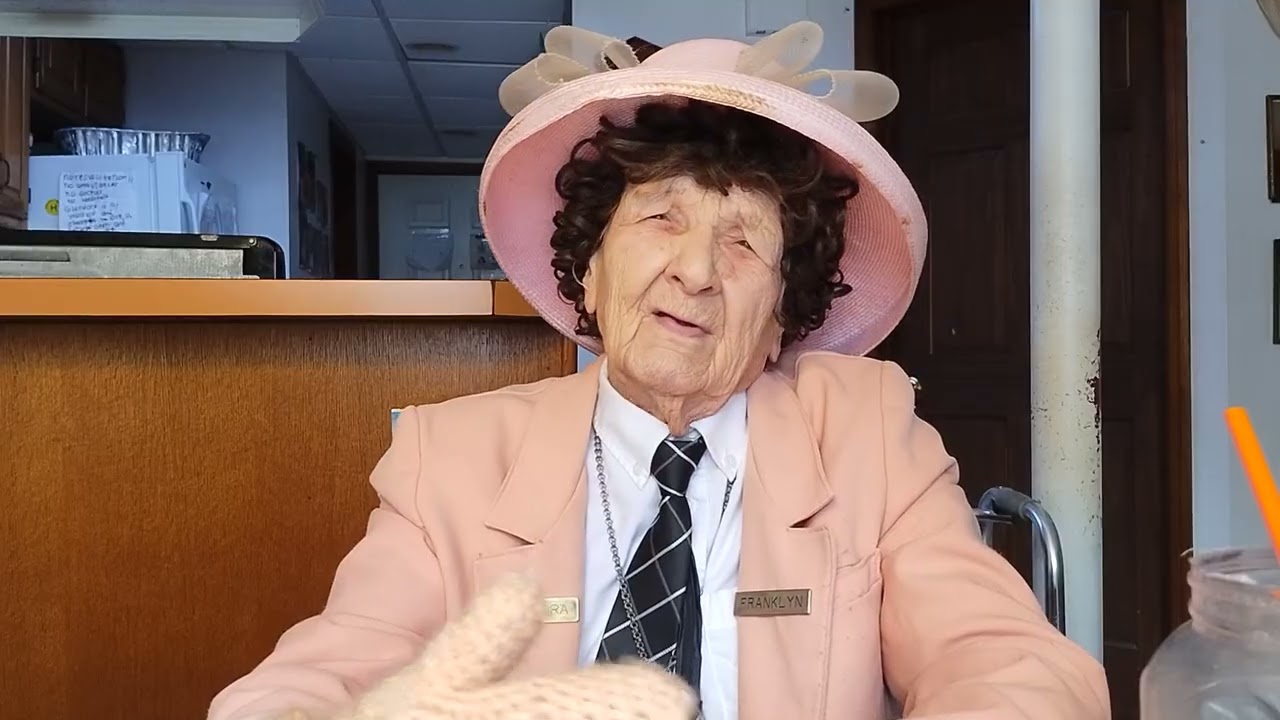
2013 Award Honoree Glendora Folsom Buell
Philosopher, judicial activist, vegan, and self-made television personality, she continues to create weekly public access television programs at age 84. With degrees in psychology and English from American International College, and graduate classes in physics from SUNY Buffalo in the 1970s, she is author of the three volume “Physics and Love,” and “The Glendora Happy Book”.
She worked at NBC in Hollywood in the early 1950s, returning to Massachusetts in 1953 to begin her own television career as a children’s show host, first in Pittsfield, Massachusetts, then at WMUR-TV in Manchester NH. Her program, The SS Glendora, ran five days a week — she played the captain, children played the sailors. Milton Bradley was interested in sponsoring the SS Glendora, but decided to sponsor Captain Kangaroo instead.
When public access cable entered the television industry in the early 1970s Glendora took to the streets of her community with her Sony Portapack and documented local stories for “A Chat with Glendora”. Aired on Valley Cable TV in Bridgeport CT, it focused on ordinary people from the local community who were doing extraordinary things.
In 1993 she documented a personal lawsuit on her TV program, and Cablevision in Long Island cancelled her show. After visiting the library and tirelessly studying the law, Glendora sued Cablevision for their violation of the public access law that states that no cable access station may have editorial control over PEG programs. Glendora took on Cablevision single-handedly and won. This case was the beginning of a string of Pro Se lawsuits challenging the violation of freedom of speech in the cable system and later in the court system. Glendora spread her knowledge of the law to her neighbors and led local efforts to teach others in her community to fight for their rights.
Glendora’s life work has added to the preservation and the legacy of community television. In her six (going on 7) decade career Glendora has inspired her community of neighbors and viewers to find the power within themselves — whether it is to tell their own story on their own TV programs or fight against an injustice against them.
Who was Clara Lemlich?
“I’VE GOT SOMETHING TO SAY” shouted the 23-year old Clara Lemlich in her native Yiddish during a tense, crowded meeting of garment workers in Cooper Union’s Great Hall in 1909. Rising from the audience, she interrupted Samuel Gompers and the other union leaders on stage. Her speech inspired the crowd, leading to an unexpected vote to strike, and to what would become known as the Uprising of 20,000.
Born to a Jewish family in the Ukraine, Lemlich migrated to the U.S. in 1903, found work in the garment industry, and soon became active in the International Ladies’ Garment Workers Union. The 1909 strike led to reforms – but the Triangle Shirtwaist Factory was a hold-out and did not implement safety improvements.
The fire that took 146 lives on March 25, 1911 was seen across the country as a tragedy that could have been avoided, and it sparked a movement that pushed politicians to accept a new notion about the responsibilities of government. Lemlich continued to be active in the labor movement until she was pushed out for her leftist politics. She continued to work for women’s suffrage, led a boycott of butcher shops to protest meat prices, campaigned for unemployment relief, and fought for tenants’ rights.
One hundred and one years later we are proud to honor her legacy and to honor those who follow proudly in her footsteps.
Tags: Captain Kangaroo, Clara Lemlich, Hollywood, Marge Piercy, Museum of the City of New York, Puffin Gallery, Social Activism, SS Glendora, Triangle Shirtwaist Factory Fire